Listen to the generated colour terms:
white
red
green
yellow
blue
brown
pink
orange
lila
grey
Abstract
Advanced Colour Terms is an artistic research installation that explores the relationship between linguistic structure, visual perception, and machine learning through the artistic generation of new colour terms. Based on the theory of Basic Colour Terms (Berlin & Kay, 1969), the project examines whether artificial systems can imitate or rethink the linguistic encoding of colour as shaped by human perceptual processes. A recurrent neural network was trained using over 300 phonetic transcriptions of colour terms from around the world, enabling the creation of new colour descriptors based on semantic categories. These terms were vocalised using a modified multilingual text-to-speech system (IMS Toucan), which neutralised linguistic bias by averaging language embeddings and blending synthetic voices. The resulting speech was synchronised with the corresponding light output in the final installation to create a continuous loop between the generated language and the perceived colour—thus asking whether artificial language, born from human data but independent of a biological systems, can meaningfully replicate or transform our experience of colour.
1. Introduction
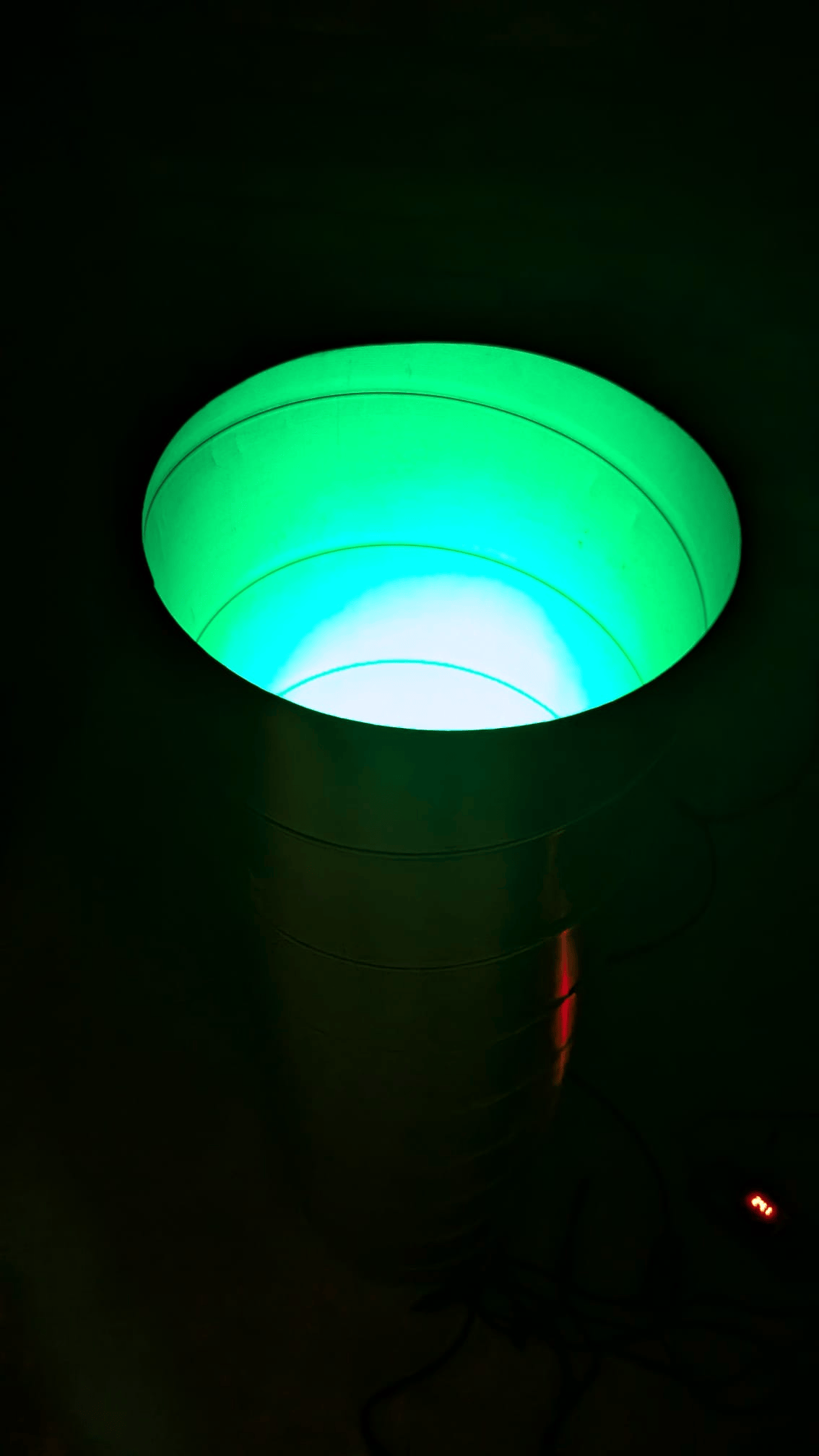
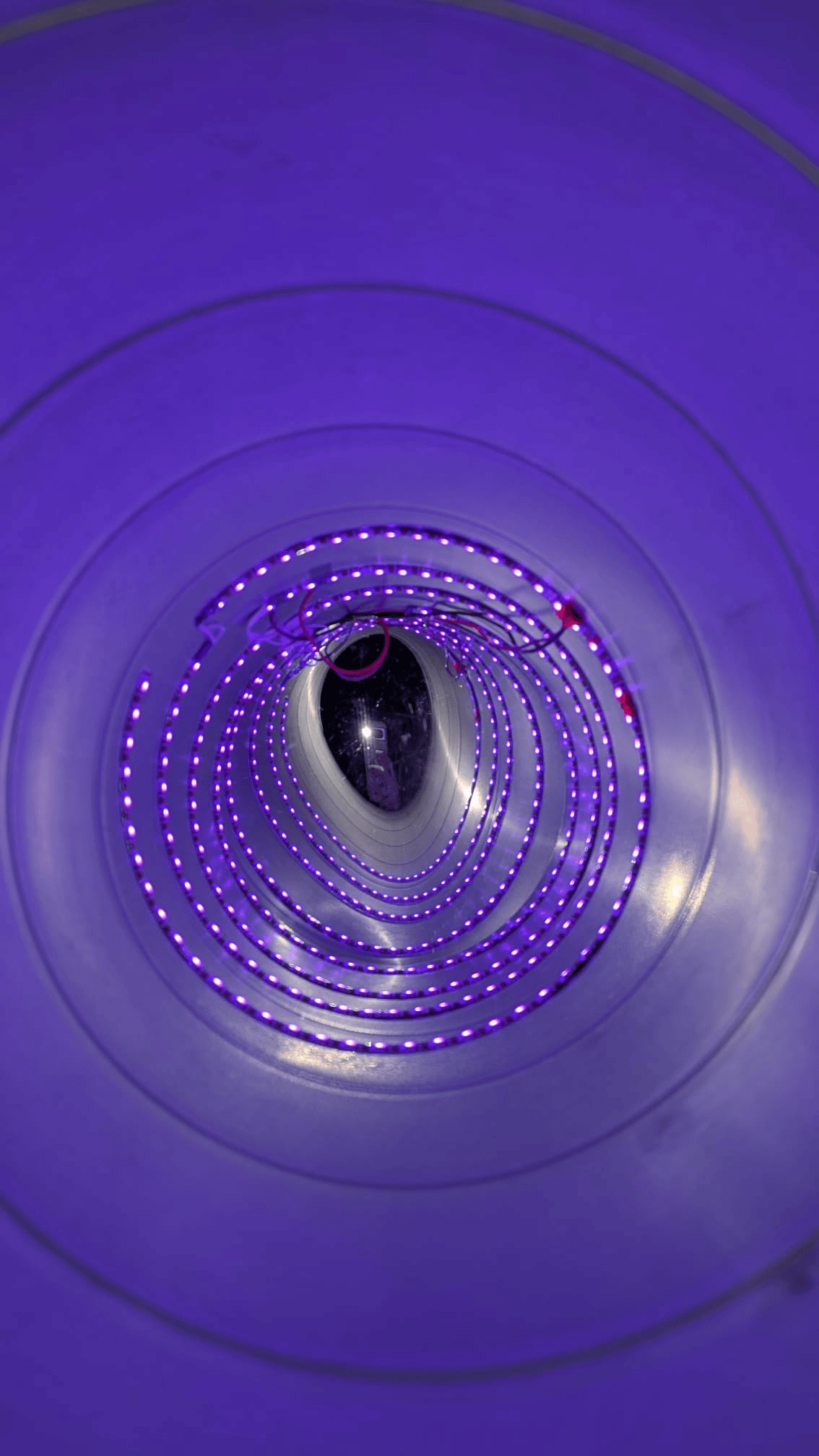
Advanced Colour Terms is an artistic installation that investigates the linguistic and perceptual boundaries of colour naming. Two industrial pipes emerge from the floor, establishing a sensory dialogue between light and sound. One pipe emits shifting fields of coloured light, while the other produces unsettling, machine-generated speech. At the centre of this interaction lies a machine learning model trained on over 300 colour terms collected from languages across the world. Drawing on this linguistic archive, the model generates entirely new colour descriptors, speculating on how a non-human intelligence might expand, disrupt, or reinvent the ways we categorise and name colours…
2. Theoretical Background
Research on colour naming has historically been shaped by the work of Berlin and Kay (1969), who proposed that all languages draw from a universal set of eleven basic colour categories: black, white, red, green, yellow, blue, brown, pink, orange, purple, and grey…
3. Methodology
Starting from Berlin and Kay’s categories, I created a dataset by collecting over 300 colour terms in multiple languages from Omniglot’s multilingual colour resource. Each term was manually transliterated into the International Phonetic Alphabet (IPA) to standardize pronunciation…
Sonic Rendering with IMS Toucan
After generating new colour terms, I used IMS Toucan, a multilingual TTS system, to vocalise these speculative forms. My goal was to synthesise voices that are artificially neutral, avoiding cultural bias…
4. Installation Concept
The installation consists of two pipes: one emitting generated colour terms as machine voices, the other projecting synchronised coloured light. This creates a closed sensory loop…
5. Discussion
The project explores whether artificial systems can replicate or reinterpret linguistic structures shaped by human sensory systems. It asks if meaning and perception can persist or even transform when disembodied from human biology…
6. References
- Berlin, B., & Kay, P. (1969). Basic color terms: Their universality and evolution. University of California Press.
- Kay, P., & McDaniel, C. K. (1978). The linguistic significance of the meanings of basic color terms. Language, 54(3), 610–646.
- Whorf, B. L. (1956). Language, thought, and reality. MIT Press.
- Zaslavsky, N., et al. (2018). Efficient compression in color naming and its evolution. PNAS.
- Lux, F., et al. (2024). Meta learning text-to-speech synthesis in over 7000 languages. arXiv.